Breed by Breed: What Popular Dogs and Cats Need From a Groom

Every week Lisa meets owners who were told the wrong thing about their pet's coat. A Husky owner told to shave for summer. A Doodle owner told every 12 weeks is fine. A Persian owner told cats groom themselves. Breed matters, but what really matters is the coat type that comes with the breed. Once you know which group your pet falls into, the right care gets a lot simpler.
Group 1: Continuously growing coats (the haircut breeds)
Breeds: Poodles (all sizes), Doodles of every mix, Shih Tzus, Bichons, Maltese, Yorkies, Havanese, Lhasa Apsos.
These coats keep growing and shed very little. The hair that would normally fall out gets caught in the coat instead, which is why they mat so easily.
- Schedule: no longer than 6 to 8 weeks between grooms, and often more frequently for longer styles.
- At home: brush down to the skin several times a week. A slicker brush followed by a metal comb is the standard test. If the comb cannot pass through, there is a tangle.
- Trouble spots: behind the ears, armpits, collar line, between the back legs and the tail.
- Service: a full haircut every visit, plus sanitary trims and nails.
Doodles deserve a special note. Their coats vary from wavy to tight curls, and the curlier the coat, the faster it mats. Many Doodle owners are surprised how quickly a fluffy puppy coat turns into a felted adult coat if brushing slips.
Group 2: Double coats (the shedders)
Breeds: Golden Retrievers, Labs, German Shepherds, Huskies, Malamutes, Australian Shepherds, Corgis, Pomeranians, Border Collies.
These dogs have a soft, dense undercoat under a coarser outer coat. The undercoat sheds heavily, especially in spring and fall.
- Schedule: most do well every 4 to 6 weeks, with extra attention during big sheds.
- At home: an undercoat rake or slicker a few times a week, more during heavy shedding.
- Service: de-shedding and a high-velocity blowout that pushes loose undercoat out before it ends up on your floor.
- Do not shave: the double coat helps regulate temperature and protects the skin from sun. Shaving can also cause the coat to grow back unevenly. A tidy trim on the feet, sanitary area and feathering is fine.
Group 3: Short, smooth coats
Breeds: Beagles, Boxers, Pit Bull types, Dachshunds (smooth), Pugs, French Bulldogs, Chihuahuas (short coat).
These look low maintenance, and the coat mostly is. But many of them shed more than people expect, and some have skin folds or sensitive skin.
- Schedule: about every 4 to 6 weeks for a bath, nails and ears.
- At home: a rubber curry brush once or twice a week. Wipe and dry skin folds on Pugs and Bulldogs regularly.
- Watch for: nails. Smaller, lighter dogs often do not wear their nails down on their own.
Group 4: Wire coats (the terriers)
Breeds: Schnauzers, Westies, Scotties, Wirehaired Dachshunds, many terrier mixes.
- Schedule: Schnauzers and Westies kept in a pet trim generally need a cut no longer than 6 to 8 weeks apart.
- At home: comb the beard and leg furnishings often. Beards collect food and water and can get smelly.
- Service: a full haircut with attention to the face, eyebrows and legs.
Group 5: Silky drop coats
Breeds: Cocker Spaniels, Springer Spaniels, Setters, Cavalier King Charles Spaniels.
- Schedule: every 4 to 6 weeks for most, sooner for Cockers in a full coat.
- At home: comb the ears and leg feathering. Spaniel ears are heavy and can trap moisture, so regular ear checks matter.
- Watch for: foxtails caught in feathering and ear hair during spring.
Cats: long hair vs short hair
Long-haired cats
Breeds: Persians, Himalayans, Maine Coons, Ragdolls, long-haired domestic cats.
- These coats mat fast, especially behind the ears, under the arms, the belly and the "britches" on the back legs.
- Persians and Himalayans also need regular face cleaning around the eyes.
- Daily or near-daily combing helps. Many owners book professional cat grooming every 6 to 8 weeks, some more often.
Short-haired cats
Breeds: American Shorthair, British Shorthair, Siamese, most domestic shorthairs.
- They still shed, sometimes a lot. A bath and de-shed can cut down hairballs and hair on furniture.
- Older or overweight cats often cannot reach their back end to groom, which leads to greasy coats and mats near the tail.
- Nail trims every few weeks protect your furniture and your arms.
Mixed breeds: groom the coat you see
Many dogs around Chino and Chino Hills are mixes, and a mix can inherit any coat. A Lab mix might have a double coat. A Poodle mix might have anything from wiry to tight curls. When you fill out the quote form, describe the coat: does it shed, does it keep growing, does it tangle? That tells Lisa more than the breed name.
Faces, feet and the parts every breed shares
No matter the coat type, a few jobs come up for every dog and cat:
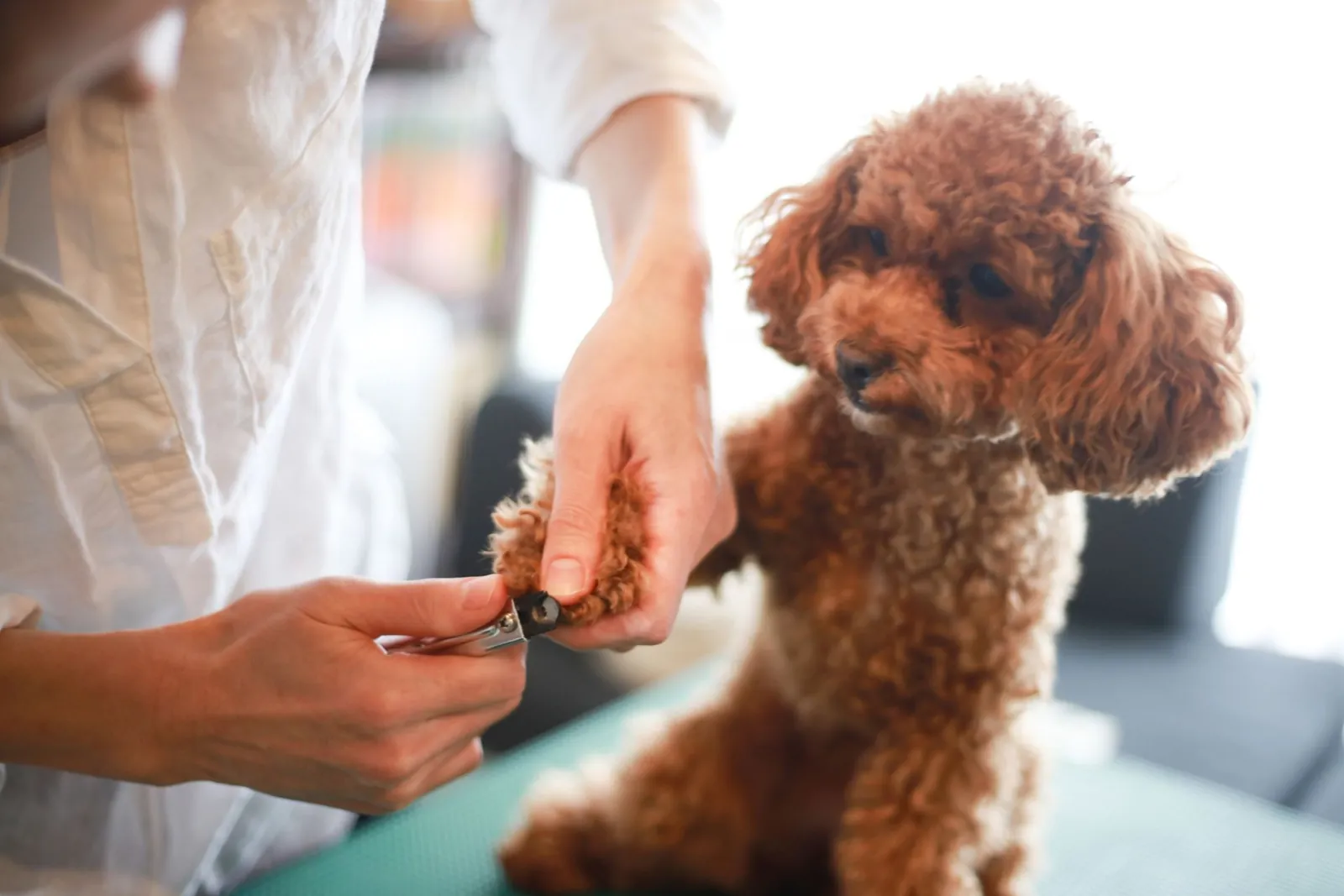
- Nails. Indoor pets and small dogs rarely wear them down. Trim every few weeks.
- Ears. Floppy-eared breeds and dogs with hairy ear canals need more frequent checks for wax, odor and debris.
- Paw pads. Hair between the pads collects burrs and foxtails and can make dogs slip on tile floors.
- Eyes. Flat-faced breeds and light-colored dogs often need gentle cleaning around the eyes to keep staining and crust down.
A quick schedule cheat sheet
- Haircut breeds: 6 to 8 weeks at most, often more frequent.
- Double coats: every 4 to 6 weeks, plus extra de-shedding in spring and fall.
- Short coats: every 4 to 6 weeks.
- Wire coats: every 6 to 8 weeks at most.
- Long-haired cats: every 6 to 8 weeks, with combing at home in between.
Get a plan for your pet's coat
If you are not sure which group your dog or cat belongs to, Lisa can help. Send a few details through the quote form, and she will reach out to talk through a schedule that fits your pet.
Quick Answers
Should I shave my double-coated dog for summer?
Generally no. The double coat helps protect the skin from sun and helps with temperature, and shaving can change how it grows back. A good de-shed and blowout removes the loose undercoat instead.
How often should a Doodle be groomed?
No longer than 6 to 8 weeks between professional grooms, and often more frequently. Brushing down to the skin several times a week in between helps prevent mats.
Do short-haired cats need grooming?
Many do. A bath and de-shed reduces loose hair, and older or heavier cats often need help keeping their back end clean. Nail trims every few weeks help too.