How Diet Shows Up in Your Pet's Skin, Coat and Groom
A groomer has a close, regular look at your pet's skin that few other people get. Every few weeks, Lisa sees the coat wet, dry, brushed out and parted down to the skin. Over the years she has learned that some coat problems are not really grooming problems at all. They start in the food bowl, or in your pet's overall health.
This article covers what to watch for and how grooming and diet support each other. One important note first: groomers are not vets. If anything here sounds like your pet, the right next step is a conversation with your veterinarian about diet and health.
Why the coat reflects what is going on inside
Skin is the largest organ your pet has, and hair is constantly growing and being replaced. Building healthy skin and coat takes protein, fats and a range of nutrients. When something is off, whether in the diet, in digestion, or from an allergy or other health issue, the coat is often one of the first places it shows.
That does not mean every dull coat means bad food. Weather, age, hormones, bathing habits and parasites all play a role. But diet is one piece worth looking at.
Coat signs a groomer often notices
- Dry, flaky skin. White flakes that show up after brushing, or a coat that feels like straw.
- Dull, brittle hair. Hair that breaks instead of brushing smooth.
- Greasy coat or strong odor. A coat that gets oily or smelly within days of a bath.
- Excess shedding outside normal seasons. Double-coated dogs shed in spring and fall, but year-round heavy loss can be worth asking about.
- Red, irritated areas. Especially on paws, belly, armpits and ears.
- Thin or patchy spots.
When Lisa notices something like this, she will mention it so you can keep an eye on it and talk to your vet if it continues. That is one of the quiet benefits of a one-on-one appointment: there is time to actually look.
Questions worth asking your vet
If your pet's skin or coat has changed, these are good questions to bring to your veterinarian:
- Is my pet's current food a good fit for their age, size and activity level?
- Could a food allergy or sensitivity be behind the itching or redness?
- Would a supplement, like a fish oil, make sense for my pet? (Ask before adding one.)
- Is my pet at a healthy weight? Overweight pets, especially cats, often cannot groom themselves properly.
- Could anything else, like parasites or a hormone issue, explain what I am seeing?
Avoid switching foods suddenly or adding several new supplements at once. Changes are easier to judge, and easier on the stomach, when they are made one at a time.
Water matters too
Hydration affects skin. Pets in the Inland Empire deal with long, hot, dry summers and Santa Ana winds that pull moisture out of everything. Keep fresh water available indoors and out, and refill it often in the heat. Cats in particular often do not drink much, so ask your vet if you are worried your cat is not getting enough water.
How grooming supports healthy skin
A good diet builds a healthy coat from the inside. Grooming keeps it working on the outside. They do different jobs.
Regular bathing with the right products
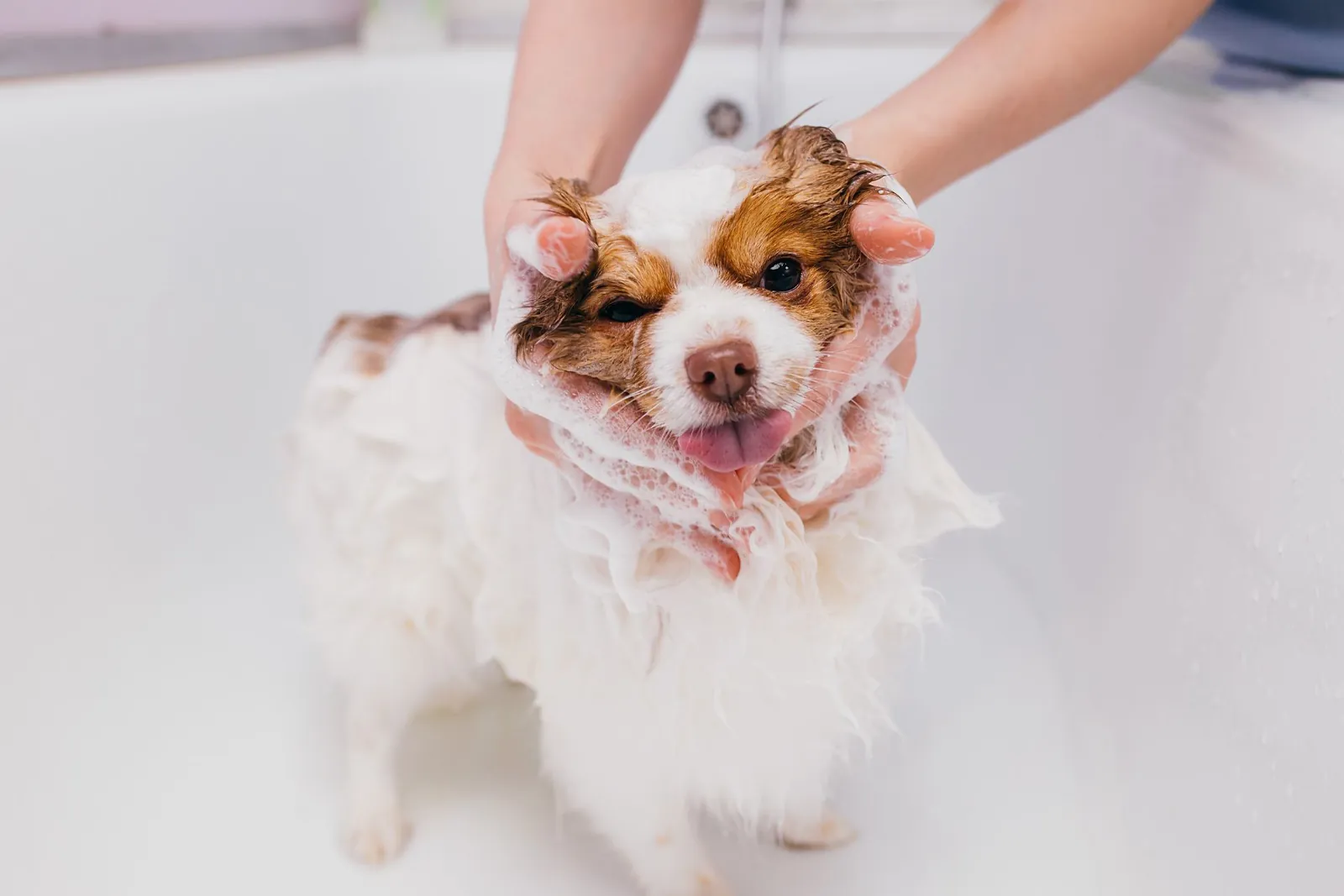
Bathing removes dirt, dead hair, excess oil and allergens that sit on the skin. Using the wrong shampoo, or human products, can strip natural oils. A professional dog bath uses products made for pets, rinsed thoroughly so no residue is left behind to irritate.
Skin conditioning
For dogs with dry or flaky skin, a skin conditioning treatment adds moisture back during the bath. It is a grooming service that helps the coat feel and look better. It is not a medical treatment, so persistent skin trouble still needs a vet visit.
Removing dead coat
Packed undercoat holds heat and moisture against the skin. De-shedding clears it out so air can reach the skin and natural oils can spread through the coat.
Brushing at home
Brushing spreads natural oils from the skin down the hair shaft. It is one of the simplest things you can do between grooms for a shinier coat.
Seasonal patterns in our area
- Summer: heat, sun and dry air. Expect drier skin and more shedding. Keep water topped off and keep up with brushing.
- Fall wind season: Santa Ana winds can leave skin and noses dry. Lisa often recommends conditioning for dogs whose skin gets flaky this time of year.
- Spring: big coat blow for double-coated breeds, plus foxtail season. Brush often and check feet and ears after walks.
Simple habits that help at home
- Brush a few minutes, several times a week, and notice how the coat feels.
- Keep treats in check. Extra calories add up, and weight affects how well cats can groom themselves.
- Rinse off chlorine or dust after a swim or a dusty hike, then dry thoroughly.
- Write down when a skin issue started and anything that changed around that time, like a new food or treat. It helps your vet.
Signs it is time to see the vet, not just the groomer
- Constant scratching, licking or chewing.
- Open sores, scabs or bleeding.
- Hair loss in patches.
- A strong smell from ears or skin that comes back quickly.
- Any lump, bump or swelling that is new or changing.
Grooming can make a pet more comfortable, but it does not diagnose or treat any of these.
Let's work on that coat together
Good food, good grooming and a vet who knows your pet make a strong team. If your dog's coat needs some help, send Lisa a quote request and mention any skin concerns so she can plan the right products and services.
Quick Answers
Can a groomer fix my dog's dry skin?
Grooming can help, with gentle bathing, thorough rinsing and skin conditioning. But groomers do not diagnose or treat skin conditions, so ongoing dryness or itching should be checked by your vet.
Should I add fish oil to my dog's food for a better coat?
Ask your veterinarian first. They can tell you whether a supplement makes sense for your pet and how much to use.
Why does my dog's coat get greasy so fast after a bath?
It can come from diet, skin health, product residue or bathing too often or too rarely. Mention it to Lisa and to your vet so you can rule out a health issue.