
Why Regular Nail Trims Matter More Than Most Owners Think
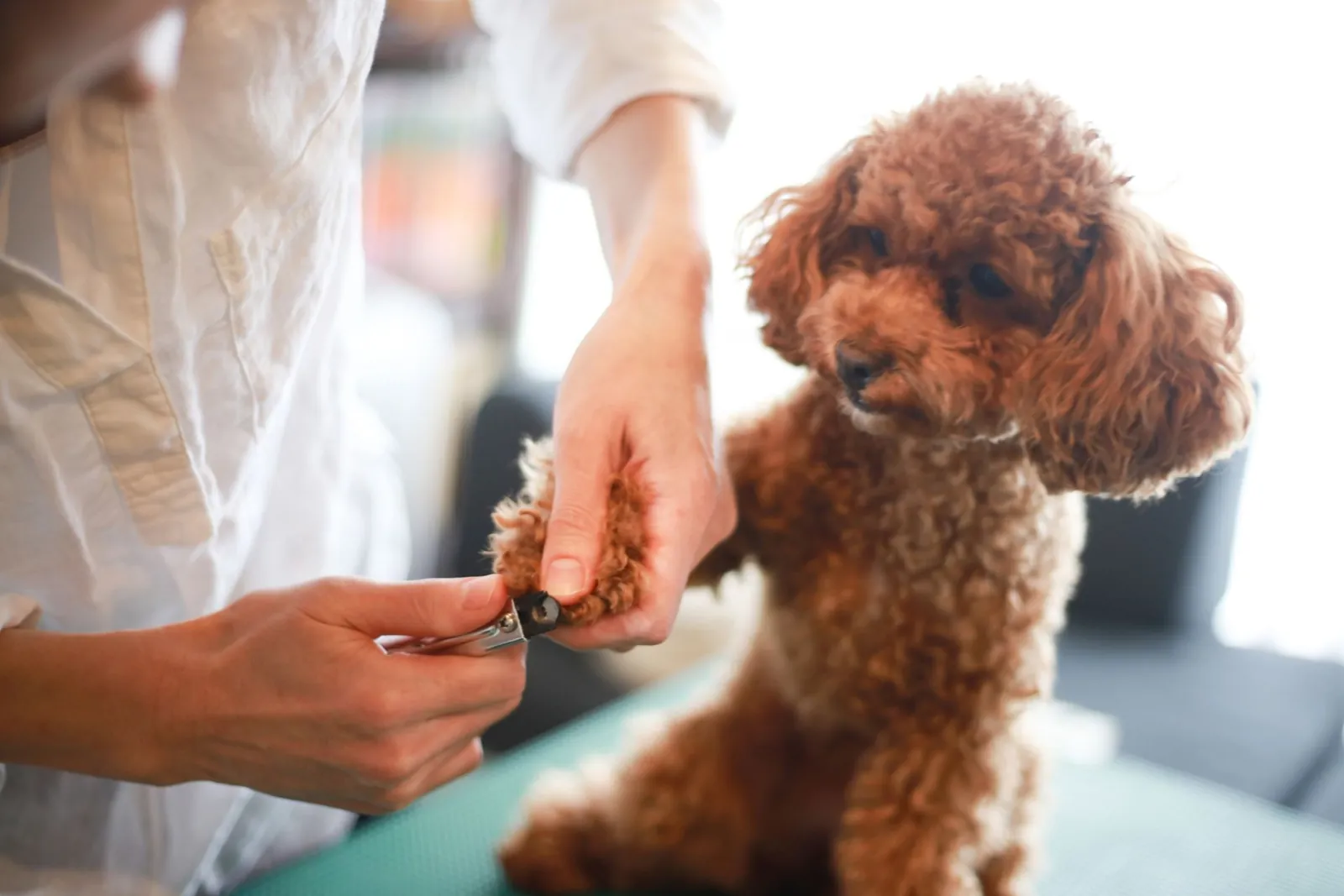
Nails are the most skipped part of dog care, and the one Lisa sees cause the most quiet discomfort. Owners notice a tangled coat right away. Long nails creep up slowly. The dog adjusts the way it stands and walks, and nobody realizes how long they have gotten until the clicking on the kitchen floor gets loud.
Here is why regular trims matter, how to tell when your dog is due, and what makes the process easier for dogs who do not love having their feet handled.
What long nails actually do to a dog
They change posture
When a nail touches the ground with every step, it pushes the toe up and back. The dog shifts its weight to compensate. Over time that can put strain on toes, wrists, and the joints further up the leg. You may notice a dog standing with feet splayed or leaning back slightly.
They reduce traction
Dogs grip the floor with their paw pads. Long nails lift the pads off the surface, which is a big reason older dogs slip on tile and hardwood. A lot of homes in Chino Hills and the surrounding area have hard flooring, so this comes up often.
They split, crack and snag
Overgrown nails catch on carpet, blankets and car seats. A torn nail is painful and can bleed a lot. Dewclaws, the nails higher up on the inside of the leg, are the worst for this because they never touch the ground.
They can curl into the pad
Left long enough, a nail, especially a dewclaw, can curve around and grow into the paw pad. That is painful and can lead to infection. If you think a nail has grown into the pad, have your vet look at it.
The quick grows with the nail
Inside each nail is the quick, which has blood vessels and nerves. When nails stay long, the quick grows longer too. That makes it harder to bring the nail back to a good length without frequent, small trims over time.
How to tell your dog is due
- You hear clicking on hard floors.
- The nails touch the ground when your dog is standing still.
- Your dog slips more than usual or hesitates on tile.
- Nails look curved or hooked, especially dewclaws.
- Your dog licks or chews at its feet.
A good rule: when your dog stands on a flat surface, the nails should be just off the ground.
How often should nails be trimmed?
For most dogs, every 3 to 6 weeks keeps nails in good shape. Several things change that:
- Small and toy breeds usually need trims more often. They are light and do not wear their nails down.
- Seniors walk less and tend to grow longer nails.
- Dogs who walk on concrete daily may wear the front nails down but still need the back nails and dewclaws done.
- Dogs with long-neglected nails benefit from more frequent trims for a while, so the quick can recede gradually.
Since most dogs are groomed every 4 to 6 weeks, nails get done at every full groom. If your dog's nails grow fast, a nail trimming visit in between can keep them on track.
Why nervous dogs often do better with mobile grooming
Many dogs dislike having their feet handled. In a busy shop, a nervous dog may be stressed before the trim even starts, from the car ride, the noise and the other animals. In Lisa's trailer, there is one dog, one groomer, and a quiet space. That alone makes a big difference.
A few other things help:
- Going slow. One paw at a time, with breaks when needed.
- Consistency. The same person every visit. Dogs learn what to expect.
- Short, frequent trims. Less to take off means a quicker, easier trim.
Helping at home
You do not need to trim nails yourself to make them easier. Practice handling instead:
- Touch your dog's paws during calm moments, like on the couch. Reward with a treat.
- Gently hold each toe for a second or two. Reward again.
- Press lightly on a pad so the nail extends. Reward.
- Keep sessions under a minute and stop before your dog gets fussy.
Do this a few times a week and grooming day gets easier for everyone.
If you do trim at home
- Use sharp clippers or a grinder made for dogs.
- Take off small amounts. On dark nails you cannot see the quick, so go slowly.
- Keep styptic powder nearby in case you nick the quick.
- If your dog is fighting you, stop. It is not worth a struggle that makes the next trim harder.
What about dogs who hate the clippers?
Some dogs tolerate clippers but hate the squeeze. Others are fine with a clip but jump at the sound of a grinder. Every dog is different, and there is no single right tool. Tell Lisa on the quote form what you have seen at past grooms or at the vet. Knowing that a dog pulls back its left hind foot, or panics when the front paws are lifted, helps her plan before she ever picks up a paw.
Do not forget the rest of the paw
Nails are just one part of foot care. Lisa also trims the hair between the paw pads, which improves traction and gives foxtails and burrs fewer places to hide. Paw tidying is part of a full haircut, and nails are included with a dog bath visit too, so your dog leaves with clean, comfortable feet.
Book a trim
If you can hear your dog coming down the hallway, it is time. Fill out the quote form and Lisa will reach out to set up a visit at your home.
Quick Answers
How often should I trim my dog's nails?
Most dogs do well with trims every 3 to 6 weeks. Small breeds, seniors and less active dogs usually need them more often.
What if I cut the quick?
It will bleed and can be painful. Press styptic powder or cornstarch onto the tip, keep your dog calm, and call your vet if the bleeding does not stop.
Can you trim nails on a dog that hates it?
Lisa works slowly, one paw at a time, in a quiet trailer with no other animals around, which helps many nervous dogs. Let her know about any touchy spots when you fill out the quote form.