DIY Cat Grooming: What You Can Safely Do and When to Call a Pro
Cats are famous for grooming themselves, and most do a good job of it. But self-grooming has limits. Long-haired cats mat. Seniors stiffen up and cannot reach their back end. Overweight cats cannot twist far enough to clean themselves. And no cat can trim its own claws.
The good news is that a lot of cat care can happen at home. The trick is knowing which jobs are safe for you and which ones are better handed to a professional. Lisa grooms cats of all breeds and sizes, and here is the advice she gives cat owners most often.
The golden rule: go slow and stop early
Cats remember bad experiences. One rough grooming session can make the next ten harder. So the most important tip is simple: keep sessions short, end on a good note, and never force it.
- Start with one or two minutes.
- Pick a calm time, like after a meal or a nap.
- Watch body language. A twitching tail, flattened ears, skin rippling along the back or a sudden stillness means stop now.
- Reward with a favorite treat every time.
Jobs you can usually do at home
Brushing
This is the single most useful thing you can do.
- Short-haired cats: a soft rubber brush or grooming mitt, once or twice a week. More during shedding season.
- Long-haired cats: a wide-tooth metal comb, then a finer comb. Daily if possible, even just a minute or two.
- Focus areas: behind the ears, under the chin, armpits, belly, and the "pants" on the back legs. These are where mats start.
- Technique: hold the fur near the skin while you comb so you do not pull. Work in small sections.
Regular brushing also cuts down on hairballs, since your cat swallows less loose fur.
Nail trims
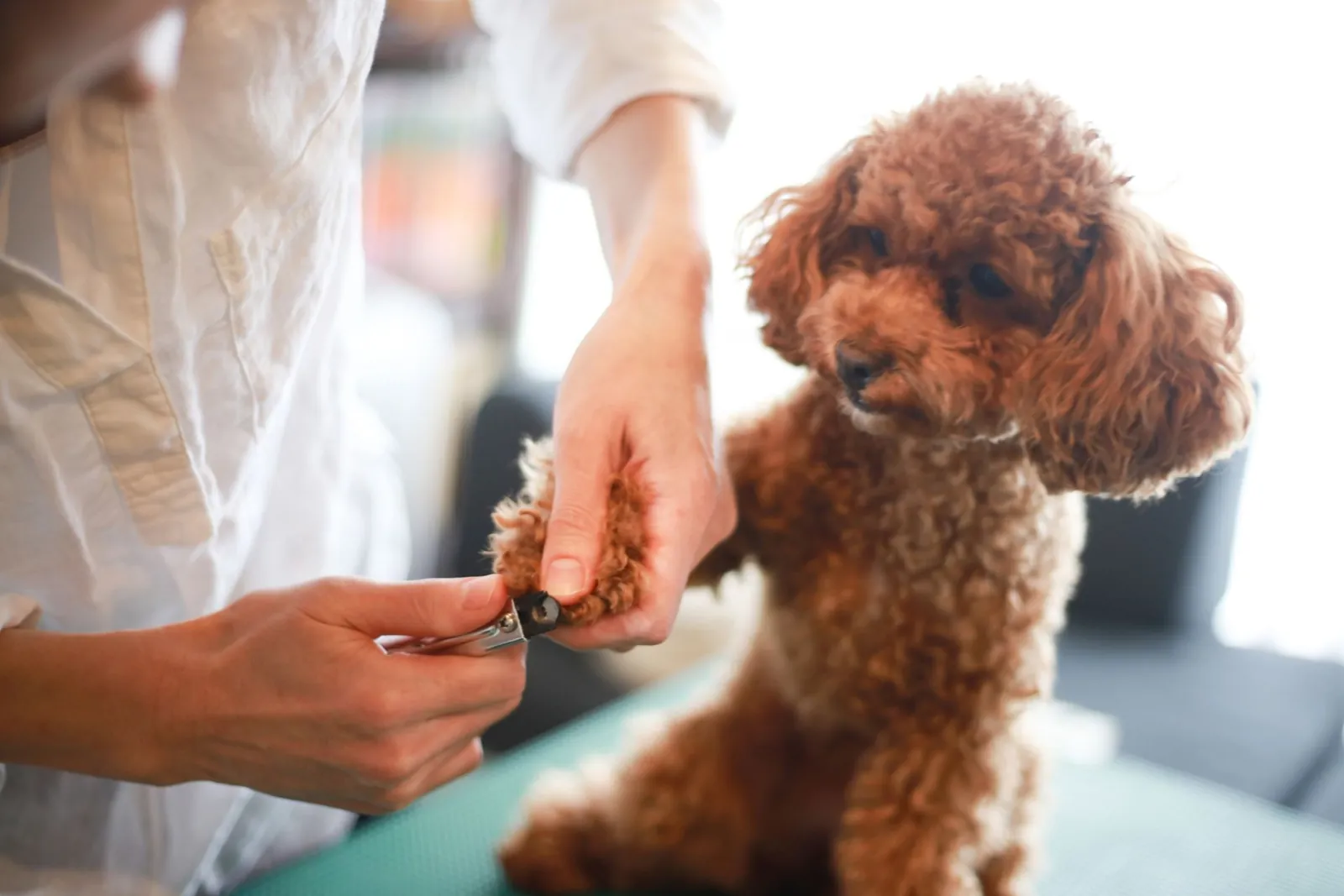
Many cats can learn to accept quick trims. Clip only the sharp tip, stay well away from the pink quick, and do a few claws at a time if that is all your cat will allow. If you are nervous or your cat fights, a professional nail trim is a good alternative.
Eye and face care
Flat-faced breeds like Persians and Himalayans often get crust or tear staining. Wipe gently with a soft, damp cloth, a separate corner for each eye. Redness, squinting, cloudiness or heavy discharge is a vet visit, not a grooming job.
Ear checks
Look inside the ears once a week. They should be clean and pale pink. Wipe only what you can see with a cotton ball and a cleaner made for cats. Never push anything into the canal. Dark debris, odor, or a cat shaking its head and scratching its ears should be checked by your vet.
Jobs best left to a professional
Cutting out mats
This is the big one. Cat skin is thin and stretchy, and it pulls up into a mat. It is very easy to cut the skin with scissors without realizing it. Cat skin also tears more easily than dog skin. Please do not use scissors on mats. A professional groomer uses clippers designed to work safely close to the skin.
Full baths
Some cats need baths: long-haired cats with greasy coats, seniors who cannot keep themselves clean, or a cat who got into something. But bathing a cat at home is hard on the cat and on you. Getting the coat fully rinsed and fully dry is the challenge. A damp long coat mats quickly. A professional setup with warm running water and proper drying makes a big difference.
Lion cuts and shave-downs
When a long-haired cat is heavily matted, a short body clip (often called a lion cut) is sometimes the most comfortable option. This needs proper clippers, a steady hand and someone who knows feline skin. It is not a home job.
Sanitary trims
Long-haired cats sometimes get litter or stool stuck in the fur around the rear. A sanitary trim keeps that area short and clean. Clipping close to such a sensitive area is best done by a professional.
Signs your cat needs professional help
- Mats you can feel close to the skin, especially clumps on the belly or back legs.
- A greasy, spiky or unkempt coat on a cat who used to stay tidy.
- Litter or stool stuck around the rear.
- Claws you cannot trim without a fight.
- Your cat cries or bites when you brush certain areas, which often means a mat is pulling.
A sudden change in self-grooming can also be a sign of pain, weight gain, dental trouble or illness. If your cat has stopped grooming, it is a good idea to check in with your vet.
Why mobile grooming suits cats
For a lot of cats, the worst part of grooming is not the grooming. It is the carrier, the car, the smells and the sound of dogs barking in the next room. Mobile grooming takes most of that away.
- Lisa's trailer parks at your home. Your cat is carried a few steps instead of driven across town.
- There are no other animals in the trailer. No dogs, no other cats.
- Appointments are one-on-one, so Lisa can go at your cat's pace.
- Your cat is back inside the house as soon as the visit is done.
Learn more on the cat grooming page.
A simple home routine
- Daily or every other day: a minute or two of combing for long-haired cats.
- Weekly: brush short-haired cats, check ears and eyes.
- Every 2 to 4 weeks: nail trim.
- Every 6 to 8 weeks or as needed: professional grooming for long-haired cats, seniors, or any cat with mats or hygiene trouble.
Supplies worth having
- A metal comb with wide and fine teeth.
- A soft rubber brush or mitt for short coats.
- Cat nail clippers and styptic powder.
- Soft cloths for eyes and face.
- A cat-safe ear cleaner.
- Plenty of treats.
Let Lisa take the hard parts
If your cat has mats, needs a bath, or will not let you near the claws, fill out the quote form. Mention your cat's temperament and any trouble spots, and Lisa will reach out to set up a quiet, at-home visit.
Quick Answers
Can I cut mats out of my cat's fur?
Please do not use scissors. Cat skin is thin and pulls up into the mat, so it is easy to cut it by accident. A groomer can remove mats safely with clippers.
Do indoor cats need professional grooming?
Many do, especially long-haired cats, seniors and cats who are overweight. Short-haired cats may only need nail trims and occasional de-shedding.
Why did my cat stop grooming herself?
It can be related to pain, weight, dental problems or illness. A change like that is worth a visit to your vet.