Inland Empire Summer and Foxtail Season: A Grooming Survival Guide
Pet owners in Chino, Chino Hills and the rest of the Inland Empire deal with two seasons that are especially hard on dogs: foxtail season in spring and the long, hot, dry stretch of summer. Lisa grew up in Chino and has been grooming here since 2012, so these are the questions she hears every year. Here is a practical guide for both.
Part 1: Foxtail season
What foxtails are
Foxtails are the seed heads of certain wild grasses. In spring, they dry out and turn into small, barbed spikes. Those barbs are designed to move in one direction only: forward. When a foxtail catches in a dog's coat, every movement can push it deeper.
They grow along trails, in empty lots, on hillsides, in parks and along fence lines. If you walk anywhere with dry grass, your dog has probably brushed past them.
Where foxtails end up
- Between the toes and paw pads. The most common spot.
- Ears. Especially floppy or hairy ears.
- Nose. From sniffing through grass.
- Eyes. Particularly with short-legged dogs.
- Armpits, groin and under the tail.
- Tangled in long coats, where they can work toward the skin.
Check after every walk
- Spread the toes on each paw and look between the pads. Use a flashlight if needed.
- Lift the ears and look inside.
- Run your hands over the whole body, feeling for anything sharp or stuck.
- Check armpits, belly, groin and under the tail.
- Comb through feathering and long coat on legs and ears.
If you find a foxtail on the surface of the coat, you can pull it out. If it is stuck in the skin or you cannot see all of it, leave it alone and call your vet.
Signs a foxtail may be embedded: see your vet
- Sudden, repeated head shaking or pawing at an ear.
- Violent or repeated sneezing, sometimes with a bloody nose.
- Squinting, a watery or swollen eye.
- Limping or constant licking at a paw.
- A small swelling or draining spot between the toes.
Embedded foxtails can travel under the skin and cause serious problems. Groomers can help prevent them and may spot one during a groom, but removal of an embedded foxtail is a job for your veterinarian.
How grooming helps in foxtail season
- Tidy paws. Trimming hair between the pads and around the feet gives foxtails fewer places to grab. This is part of every full haircut.
- Shorter ear and leg feathering. For spaniels, Doodles and other long-coated dogs, a slightly shorter spring trim on ears, legs and belly makes daily checks much easier.
- Clean ears. Routine ear cleaning keeps ears tidy and gives Lisa a chance to look inside.
- Regular brushing. Catches foxtails before they work down to the skin.
Simple prevention
- Avoid tall, dry grass where you can, especially in late spring.
- Keep your yard mowed and pull foxtail grasses along fence lines.
- Do not let your dog sniff deep into weedy patches.
Part 2: Summer heat
Inland Empire summers are long, hot and dry, and Santa Ana winds can add dry, gusty days well into fall. Here is how to help your dog stay comfortable.
Do not shave double-coated breeds
This is the most common summer mistake. Golden Retrievers, Huskies, German Shepherds, Australian Shepherds, Corgis, Pomeranians and other double-coated dogs have an undercoat and an outer coat that work together. The coat helps protect the skin from sun and helps with temperature regulation. Shaving can leave the skin exposed to sunburn, and the coat may grow back patchy or with a different texture.
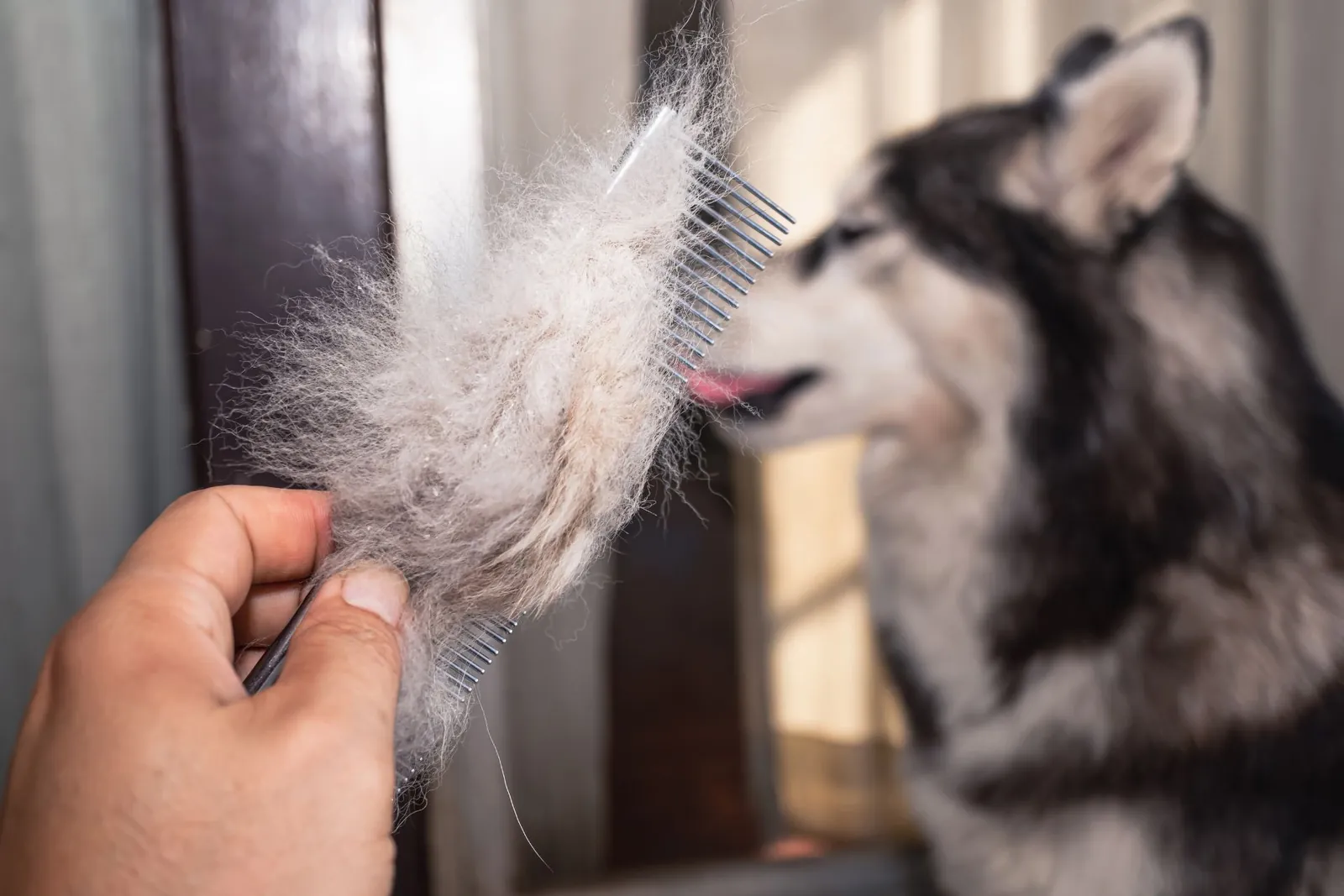
What actually helps is removing the loose, dead undercoat. A professional de-shedding treatment with a high-velocity blowout clears out that packed undercoat so air can move through the coat. Tidying the feet, sanitary area and feathering is fine.
Haircut breeds: choose a manageable length
Poodles, Doodles, Shih Tzus, Bichons and other haircut breeds do not have the same kind of double coat, so a shorter summer trim is fine and often more comfortable. A short, easy-care length is also easier to keep tangle-free after swimming and outdoor play. Ask Lisa about a length that suits your dog's lifestyle.
Keep up with brushing
Mats trap heat and moisture against the skin. A tangle-free coat, at any length, is cooler and more comfortable than a matted one.
Protect paws from hot pavement
- Walk early in the morning or later in the evening.
- Test pavement with the back of your hand for several seconds. If it is too hot for you, it is too hot for paws.
- Stick to grass or shade when you can.
Water, shade and rest
- Fresh water indoors and out, refilled often.
- Shade in the yard all day long, not just in the morning.
- Never leave a pet in a parked car, even for a few minutes.
- Know the warning signs of overheating: heavy panting, drooling, weakness, confusion, vomiting or collapse. Get to a vet right away if you see them.
After swimming
Rinse off chlorine or lake water and dry the coat thoroughly, especially ears. Damp coats tangle and can get smelly in the heat.
Why mobile grooming fits our summers
With mobile grooming, your dog is not riding in a warm car or waiting in a kennel. The trailer parks at your home, your dog is groomed one-on-one, and they go straight back inside when it is done. Many owners like morning appointments in the hottest months.
Seasonal checklist
- March to June: foxtail checks after every walk, tidy paws and ears, spring de-shed.
- June to September: de-shed double coats (no shaving), manageable trims for haircut breeds, early walks, plenty of water.
- Fall winds: brush often and watch for dry skin.
Book a seasonal groom
Lisa serves Chino, Chino Hills, Diamond Bar, Phillips Ranch, Upland, Claremont, Ontario and Eastvale. To get your dog ready for foxtail season or the summer heat, fill out the quote form and Lisa will reach out to schedule.
Quick Answers
Should I shave my Husky or Golden Retriever for summer?
Generally no. Their double coat helps protect the skin from sun and helps with temperature. A de-shed and blowout removes loose undercoat instead.
What should I do if my dog has a foxtail stuck in its ear or paw?
If it is loose on the coat you can remove it. If it is embedded or you see head shaking, sneezing, squinting or limping, see your vet right away.
How can grooming help prevent foxtail problems?
Trimming hair between the paw pads and keeping ear and leg feathering shorter gives foxtails fewer places to catch, and makes checks after walks much easier.